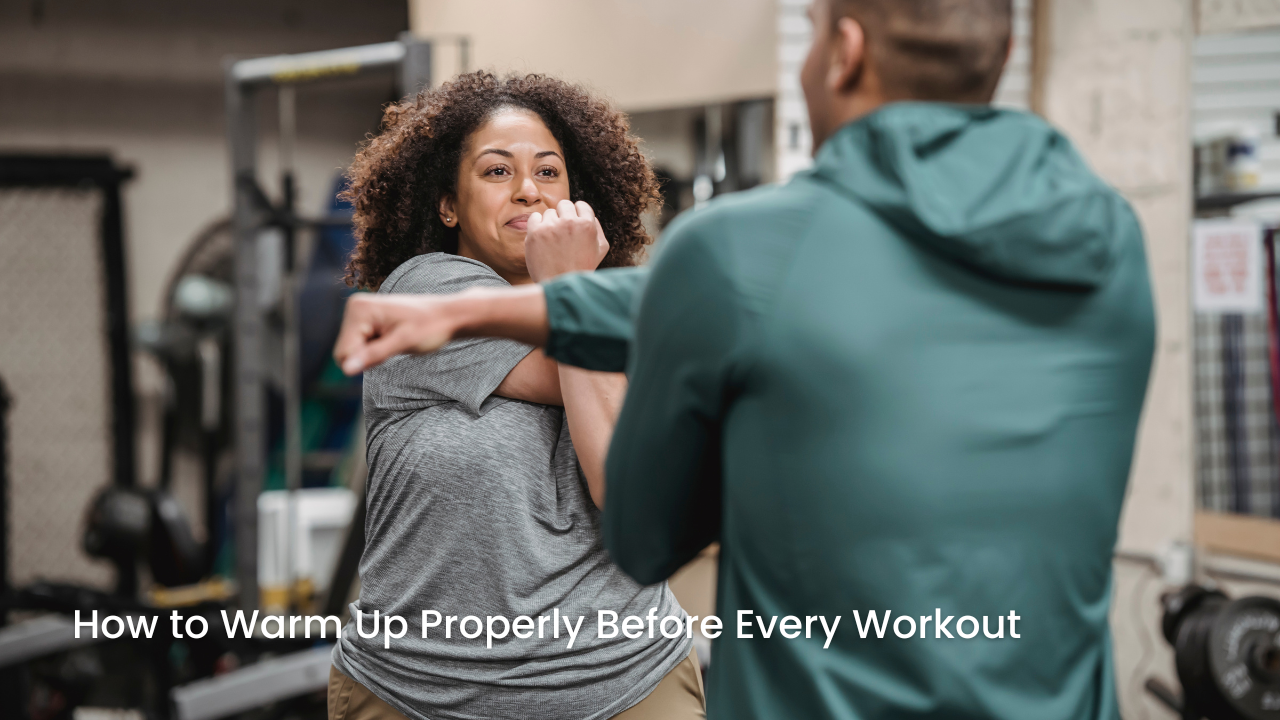
Most people treat the warm-up as an afterthought — a few arm circles, a quick stretch, maybe a slow minute on the treadmill before jumping straight into the session. But if you want to train harder, move better, and stay injury-free for the long term, understanding how to warm up properly before exercise is one of the highest-return investments you can make in your fitness. A well-structured warm-up doesn’t just prepare your body for movement. It primes your nervous system, activates the muscles you’re about to use, and sets the tone for everything that follows.
Why Warming Up Actually Matters
The benefits of a proper warm-up go well beyond injury prevention — though that alone should be enough. Research consistently shows that a structured pre-workout routine improves strength output, reaction time, movement coordination, and overall exercise performance. In short, you lift more, move faster, and feel better when you’ve prepared properly.
Here’s what’s happening physiologically when you warm up correctly:
- Core temperature rises: Warmer muscles contract more forcefully and relax more quickly, improving both power output and movement efficiency.
- Blood flow increases: More oxygen and nutrients reach working muscles, reducing early fatigue and improving endurance capacity.
- Joint lubrication improves: Synovial fluid — the natural lubricant inside your joints — becomes less viscous with movement, reducing friction and protecting cartilage.
- Neural activation sharpens: Your nervous system becomes primed for the specific movement patterns ahead, improving coordination, reaction time, and muscle recruitment efficiency.
- Mental focus shifts: The warm-up creates a deliberate transition from the demands of your day into the demands of your session — a performance cue your brain learns to respond to over time.
The Three Phases of a Proper Warm-Up
An effective warm-up isn’t a single activity — it’s a progressive sequence of three distinct phases, each building on the last. Think of it as a ramp, not a switch.
Phase 1: General Cardiovascular Activation (3–5 Minutes)
The first phase is about raising your core temperature and increasing circulation to working muscles. This doesn’t need to be complicated or exhausting — its sole purpose is to shift your body out of a resting state and into a physiologically prepared one.
Effective options include a brisk walk or light jog, rowing machine at easy effort, cycling on a stationary bike, or skipping. The key word is light — you should feel warmer and slightly elevated in breathing, not fatigued. If you’re finishing this phase out of breath, you’ve gone too hard.
Phase 2: Dynamic Mobility and Movement Prep (5–7 Minutes)
This is the most important and most commonly skipped phase of the warm-up. Dynamic mobility work takes your joints through their full range of motion under controlled movement — preparing the specific joints and muscles you’re about to load in your session.
Unlike static stretching (holding a stretch for 30–60 seconds), dynamic movements are active and flowing. Research has shown that static stretching performed before exercise can temporarily reduce force production — the opposite of what you want before a training session. Dynamic work, by contrast, improves range of motion and potentiates performance.
A well-rounded dynamic warm-up typically includes:
- Leg swings (front-to-back and side-to-side): Mobilises the hip joint through its full range — essential before any lower body or running-based session.
- Hip circles and 90/90 hip rotations: Opens the hip capsule and prepares the glutes and hip flexors for loaded movement.
- Thoracic spine rotations: Unlocks rotation through the mid-back — critical before pressing, rowing, or any rotational movement.
- World’s greatest stretch: A compound mobility exercise that simultaneously addresses the hip flexor, thoracic spine, and hamstring — arguably the single most efficient warm-up movement available.
- Inchworms: Challenges hamstring flexibility and shoulder stability while warming up the entire posterior chain dynamically.
- Arm circles and shoulder CARs (Controlled Articular Rotations): Prepares the shoulder joint before any upper body pressing or pulling work.
- Ankle circles and calf raises: Often neglected, but essential before running, jumping, or heavy squatting.
Tailor this phase to your session. Lower body day? Prioritise hip, knee, and ankle mobility. Upper body pressing? Focus on shoulder and thoracic spine preparation. Running or HYROX? Include both hip and ankle work alongside light plyometric activation.
Phase 3: Movement-Specific Activation and Warm-Up Sets (3–5 Minutes)
The final phase bridges the gap between general preparation and the actual demands of your session. It involves two key components: muscle activation and progressive warm-up sets.
Muscle activation targets the specific muscles that will be working hardest during your session, ensuring they’re fully recruited before you add load. Common activation exercises include:
- Glute bridges or banded clamshells before squats or deadlifts
- Band pull-aparts and face pulls before bench press or overhead pressing
- Dead bugs or bird dogs before any core-intensive work
- Single-leg balance drills before running or unilateral leg training
Progressive warm-up sets are essential for any strength or resistance training session. Rather than jumping straight to your working weight, build gradually through 2–3 lighter sets that rehearse the movement pattern at sub-maximal loads. A practical example for someone squatting 80kg:
- Bodyweight squats × 10 reps
- 20kg (empty barbell) × 8 reps
- 50kg × 5 reps
- 65kg × 3 reps
- 80kg — first working set
This progressive loading primes your nervous system for the movement, grooves the pattern under gradually increasing load, and identifies any tightness or asymmetries before you’re under a heavy bar.
How Long Should a Warm-Up Take?
A complete warm-up — all three phases — should take between 10 and 15 minutes for most training sessions. More complex sessions involving heavy compound lifts, high-intensity intervals, or sport-specific demands may warrant a slightly longer preparation period of up to 20 minutes.
If you’re genuinely short on time, compress the cardiovascular phase and prioritise the dynamic mobility and activation work. The warm-up sets within your session are non-negotiable regardless of time pressure — they take only minutes but protect you from the kind of injury that could sideline you for weeks.
What to Avoid in Your Warm-Up
Knowing what not to do is just as valuable as knowing what to include.
- Don’t lead with static stretching: Holding deep stretches for 30+ seconds before training temporarily reduces muscle stiffness in a way that impairs force production. Save static stretching for your cool-down.
- Don’t make it a workout: Your warm-up should prepare you for effort, not create fatigue before you’ve begun. Keep intensity low to moderate throughout all three phases.
- Don’t use the same warm-up for every session: A generic warm-up is better than nothing, but a session-specific one is significantly more effective. Match your preparation to the demands of what follows.
- Don’t skip it on easy days: Lower intensity sessions still benefit from movement preparation, and light activity days are often when non-obvious tightness and imbalances reveal themselves.
Conclusion: Your Warm-Up Is Part of Your Training
The athletes and gym-goers who stay consistent, injury-free, and continually progressing over years and decades are rarely the ones who train the hardest — they’re the ones who prepare the most intelligently. A structured warm-up is not the boring part before the real session begins. It is part of the session — and treating it that way will change the quality of every workout that follows.
At Hollywings Wellness Club, every class and coached session is built around intelligent preparation and purposeful movement — from the first warm-up drill to the final cool-down. Whether you’re new to structured training or looking to elevate an established routine, our coaches are here to make sure every minute of your session counts. Explore our classes and training programmes and experience the Hollywings difference.